AI scouting · 7 min
Using AI in scouting: assistance, not autopilot
How AI accelerates scouting teams without replacing role fit, video work and sporting responsibility.
FI-SO 360° Redaktion ·

AI is strong at structure, not responsibility
AI is not your scout.
It is your second analyst.
That sounds like a small difference.
It is not.
If AI decides, you build a more convenient version of old mistakes.
If AI asks, you build a better process.
AI can sort. Compress. Find contradictions. Make patterns visible.
It cannot carry responsibility.
And that is where good scouting begins.
Not with autopilot.
With the better question.
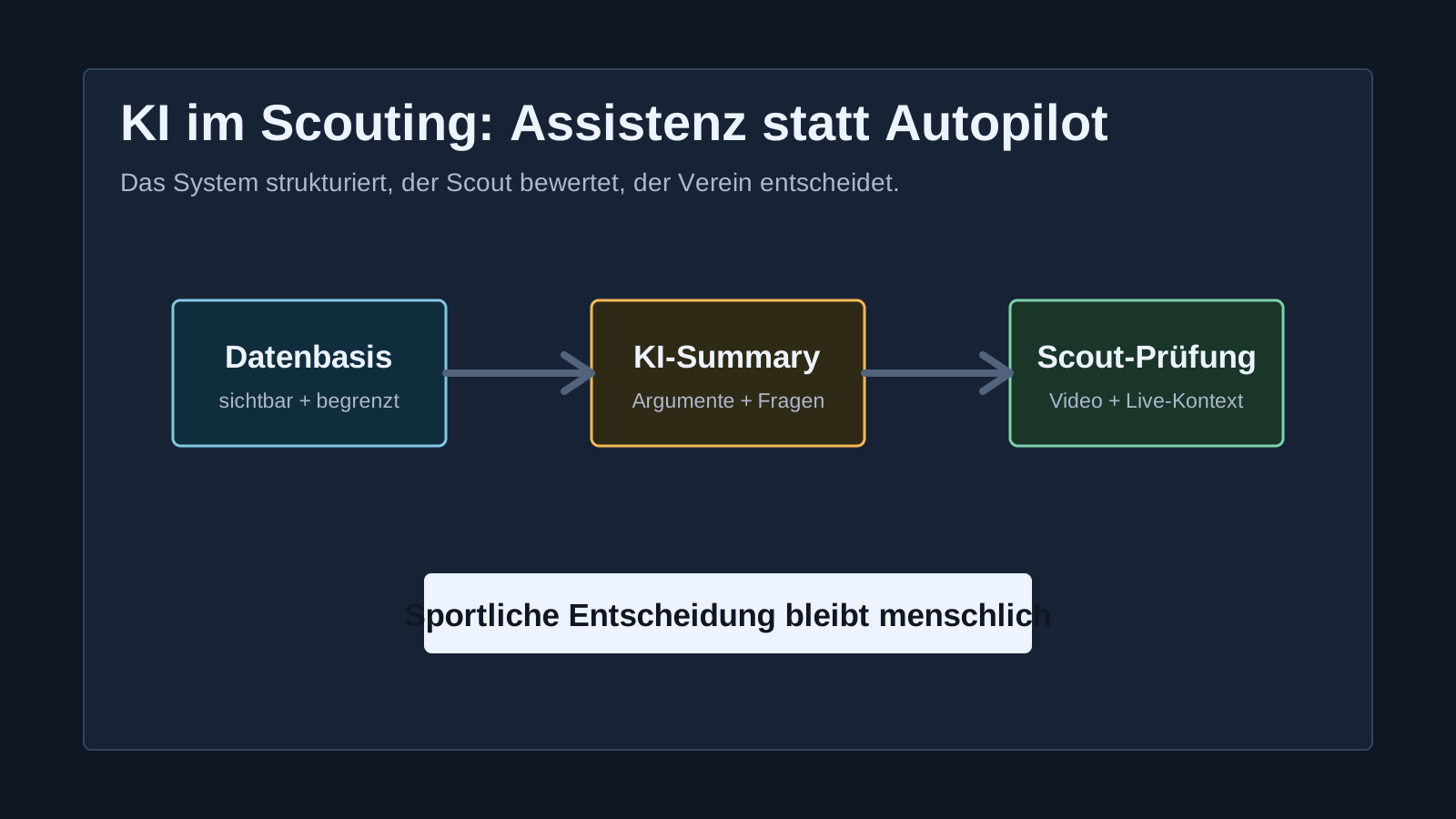
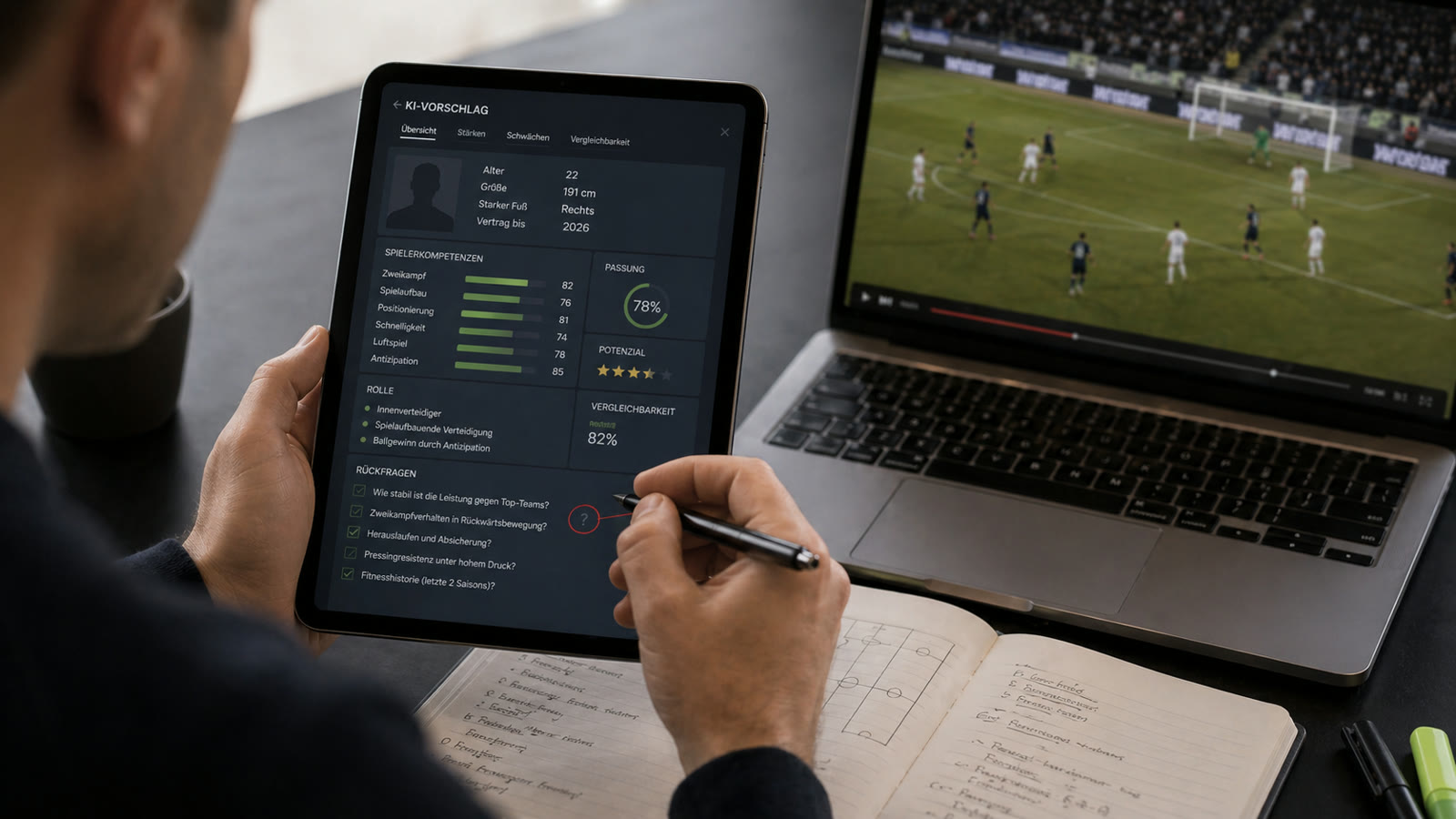
Where AI helps concretely
The uncomfortable truth: AI reveals weak processes faster.
It does not automatically improve them.
Used well, AI can support three things especially well:
- make large datasets easier to read
- explain candidates along a role profile
- formulate open checks for video, live scouting or conversations
That saves time because scouts do not have to start from zero.
Instead of reading a table row by row, they receive a structured first assessment: why could this player fit?
Which signals support the recommendation?
Which uncertainty remains?
What AI should not do
It becomes risky when AI is treated as the final authority.
Generated text can sound convincing even when the data basis is thin.
A ranking can look precise even when important context is missing.
AI in scouting therefore needs clear guardrails:
- visible data basis
- traceable sources and metrics
- notes on missing information
- separation of fact, interpretation and recommendation
- clear next scouting steps
Without those guardrails, false certainty appears quickly.
The best use case: better questions
AI should not only deliver answers.
It should prepare better questions.
For example:
- Why does this candidate rank highly despite weaker raw values?
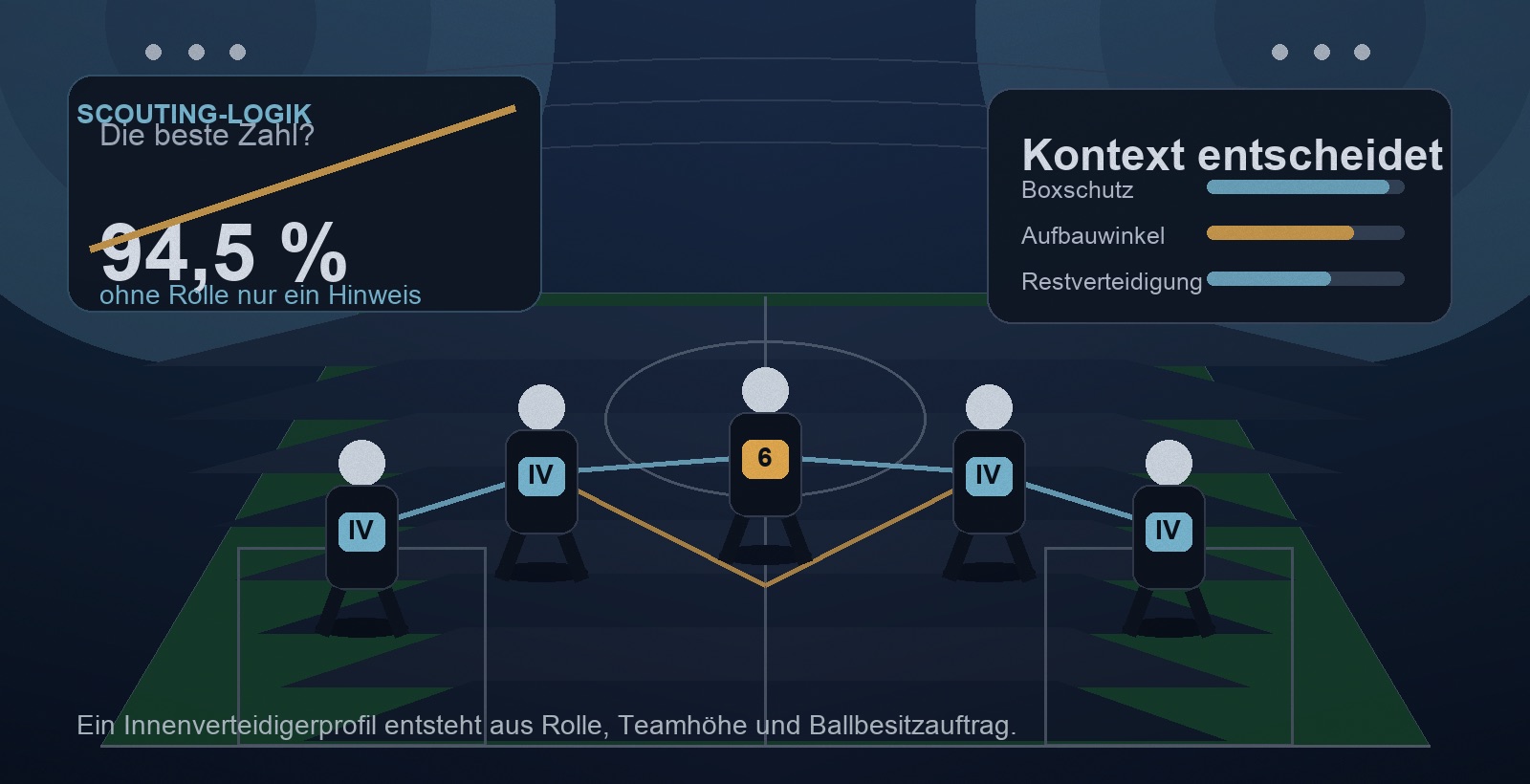
- Which role would he need to play in the target team?
- Which phases are most important for video analysis?
- Which risks depend on minutes or competition level?
In that setup, AI becomes a tool for better scouting work.
It does not replace the eye.
It focuses it.
Conclusion
AI in scouting is strongest when it increases transparency and structures work.
It should not buy or reject players.
It should explain, prioritise and make open questions visible.
The decision remains sporting.
But the route towards it can become much faster and cleaner.
The biggest AI mistake: answers without uncertainty
In scouting, a clear answer is attractive.
A system that says “this player fits” feels efficient.
That is exactly where the risk begins.
Transfer decisions live with uncertainty.
Data can be incomplete, roles can change and a player can behave differently in another team context.
If AI does not make that uncertainty visible, it creates false confidence.
Good AI in scouting should therefore not only deliver results.
It should structure uncertainty.
It should explain which data supports the recommendation, which information is missing and which assumptions need to be checked.
That is less spectacular than a final verdict, but much more useful.
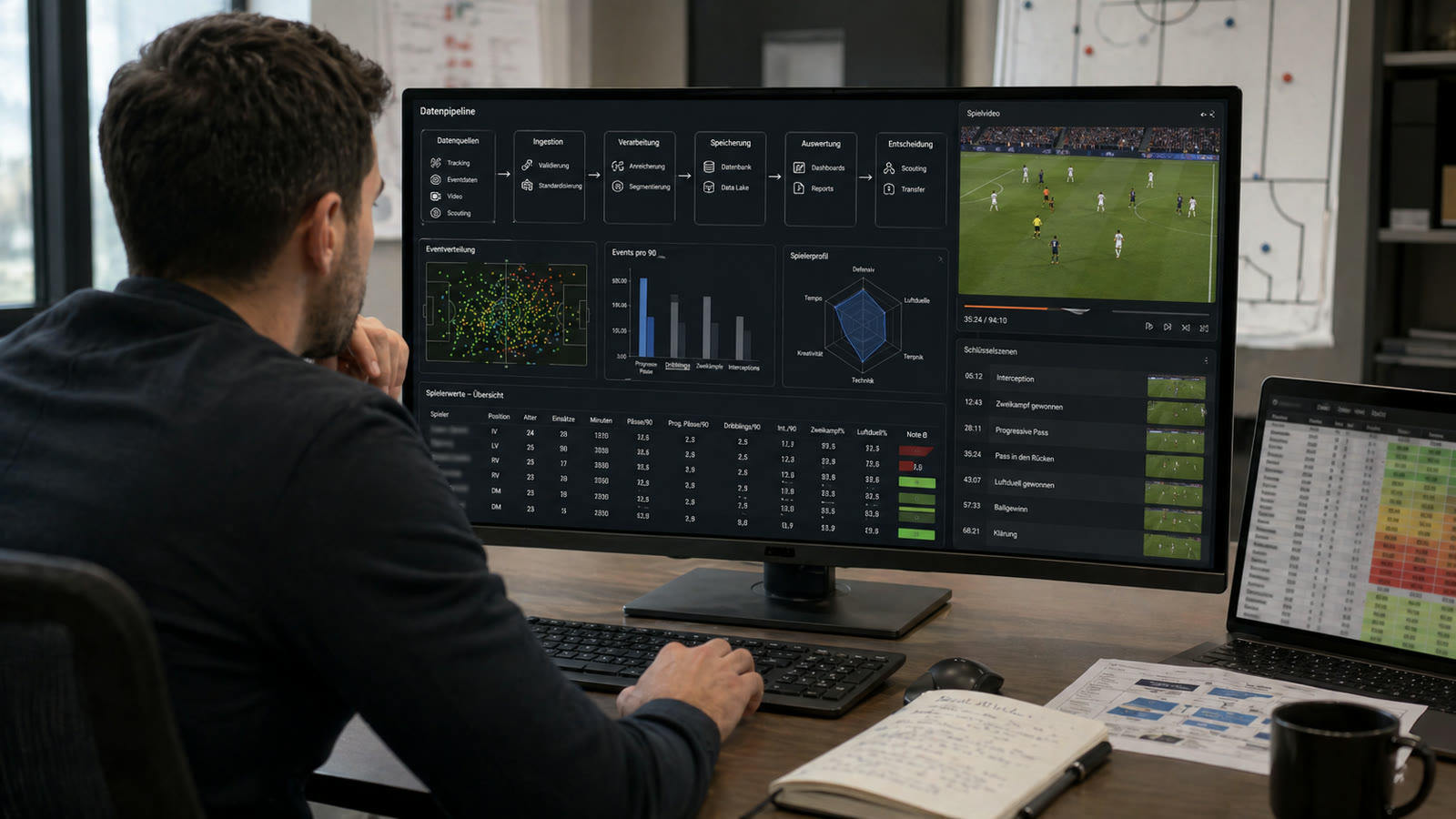
AI as a second analyst
The best comparison is not autopilot, but a second analyst in the room.
A good analyst reduces work, asks follow-up questions, organises evidence and spots contradictions.
He does not decide a transfer alone.
AI should be used in the same way.
It can summarise a shortlist, describe candidates by role fit or highlight differences between two players.
It can also help turn a vague question into a sharper search request.
“We need a fast winger” becomes: are we looking for runs in behind, one-v-one strength, pressing intensity or transition threat?
That step is valuable in daily work because many scouting questions begin imprecisely.
AI can help translate them into criteria that can actually be checked.
Good prompts start with good football logic
AI is only as good as the structure around it.
If the task is vague, the answer will be vague.
If the data context is missing, the model fills gaps with plausible language.
Good AI scouting therefore does not begin with the prompt.
It begins with the football logic behind the prompt.
A good AI task contains:
- target role and game model
- relevant peer group
- hard must-have criteria
- desired strengths
- known limitations of the data basis
- desired output format
With this information, AI can help much better.
It does not have to guess the actual question.
It can compress the data along a clear sporting task.
What AI does especially well
AI is strong at bringing structure to large amounts of information.
It can turn long data responses into readable summaries.
It can cluster similar candidates.
It can collect counterarguments.
It can explain why a player may be risky despite strong values.
AI is especially useful for recurring tasks:
- first candidate description
- comparison of two profiles
- formulation of open video questions
- summary of a scouting report
- translation of technical metrics into clear language
- preparation of a meeting briefing
These tasks are not glamorous, but they save a lot of time.
They also improve consistency because similar cases are described through similar logic.
What AI should not do
AI should not invent medical assessments, estimate salary reality without data, infer character from metrics or give a final buy recommendation without human review.
It should also not pretend to have seen video or market signals that are not in the data basis.
Those limits must be visible in the product.
If an AI text is based on limited data, that must be shown.
If a recommendation is based only on statistical signals, it should not look like a complete scout report.
In football, context is too expensive to hide.
An honest note about missing information is more valuable than a smooth answer.
Human decision remains central
The sporting responsibility remains with people.
Scouts often see body shape, timing, courage, communication and reaction to pressure better than a data system.
Coaches know which behaviours really work in their team.
Sporting directors understand budget, market timing and squad dynamics.
AI can prepare these perspectives, but not replace them.
It can focus the discussion.
It can make contradictions visible.
It can help prevent a candidate from being overrated because of one eye-catching metric.
But it should never be the final authority.

A useful AI workflow in scouting
A sensible workflow could look like this:
1.
Define the role profile.
2.
Set search space and must-have criteria.
3.
Generate a data-based candidate list.
4.
AI summarises role fit, risks and open questions.
5.
Scout checks video and live evidence.
6.
Team discusses candidates with visible data basis.
7.
AI helps with the final briefing, but humans decide.
This workflow uses AI where it is strong: structure, speed and clarity.
At the same time, it protects the decision process from automation in the wrong place.
Conclusion
AI in scouting is not a replacement for expertise.
It is a lever to apply expertise faster and more consistently.
Good systems do not deliver magic answers.
They deliver better working material: clear summaries, visible uncertainty, open checks and traceable arguments.
Assistance, not autopilot, is therefore not cautious wording.
It is the professional way to use AI in football.
Governance: who may use AI results?
The more AI enters scouting processes, the more important governance becomes.
It must be clear who may create, edit and introduce AI results into decisions.
An intern, scout, analyst and sporting director may give the same answer different weight.
Without rules, confusion quickly appears around the actual status of an AI text.
A professional setup distinguishes between working note, analysis suggestion and decision-relevant report.
An AI summary can be a useful first draft.
It becomes decision-relevant only when a person has checked, corrected and approved it.
This separation protects the process and prevents automatically generated text from receiving too much authority.
AI needs feedback from real decisions
AI workflows improve when they learn from practice.
Which summaries were helpful?
Which risk notes were later confirmed?
Which candidates were overrated because important context data was missing?
This feedback should not disappear in meetings.
It should inform the development of role profiles, prompts and data logic.
That creates a learning process.
AI does not replace the organisation.
It helps the organisation use its knowledge more consistently.
The real competitive advantage then lies not in the model alone, but in the connection between club logic, data quality and human feedback.
Transparency decides trust
AI will be accepted in scouting only if its reasoning remains traceable.
Users need to see whether an answer is based on broad data, a few signals or a narrow search logic.
A short note on the data basis can create more trust than a perfectly written paragraph without source awareness.
This matters especially for negative recommendations.
If AI explains why a player does not fit, it must be clear whether the reason is missing data, weak role values or real counterarguments.