Methodology · 7 min
Fit scores: compare transfer decisions with more context
How a fit score connects candidates, roles and risk signals.
FI-SO 360° Redaktion ·

Comparability before instinct
A score is dangerous.
Especially because it looks useful.
82.7 feels clean. Precise. Objective.
Maybe it is just a number in a good suit.
The fit score is not the decision.
It is the provocation before the decision.
It forces the room to answer: which role are we actually comparing against?
Without that question, every score is theatre.
With it, the score becomes valuable.
Not because it is right.
Because it makes the right arguments visible.
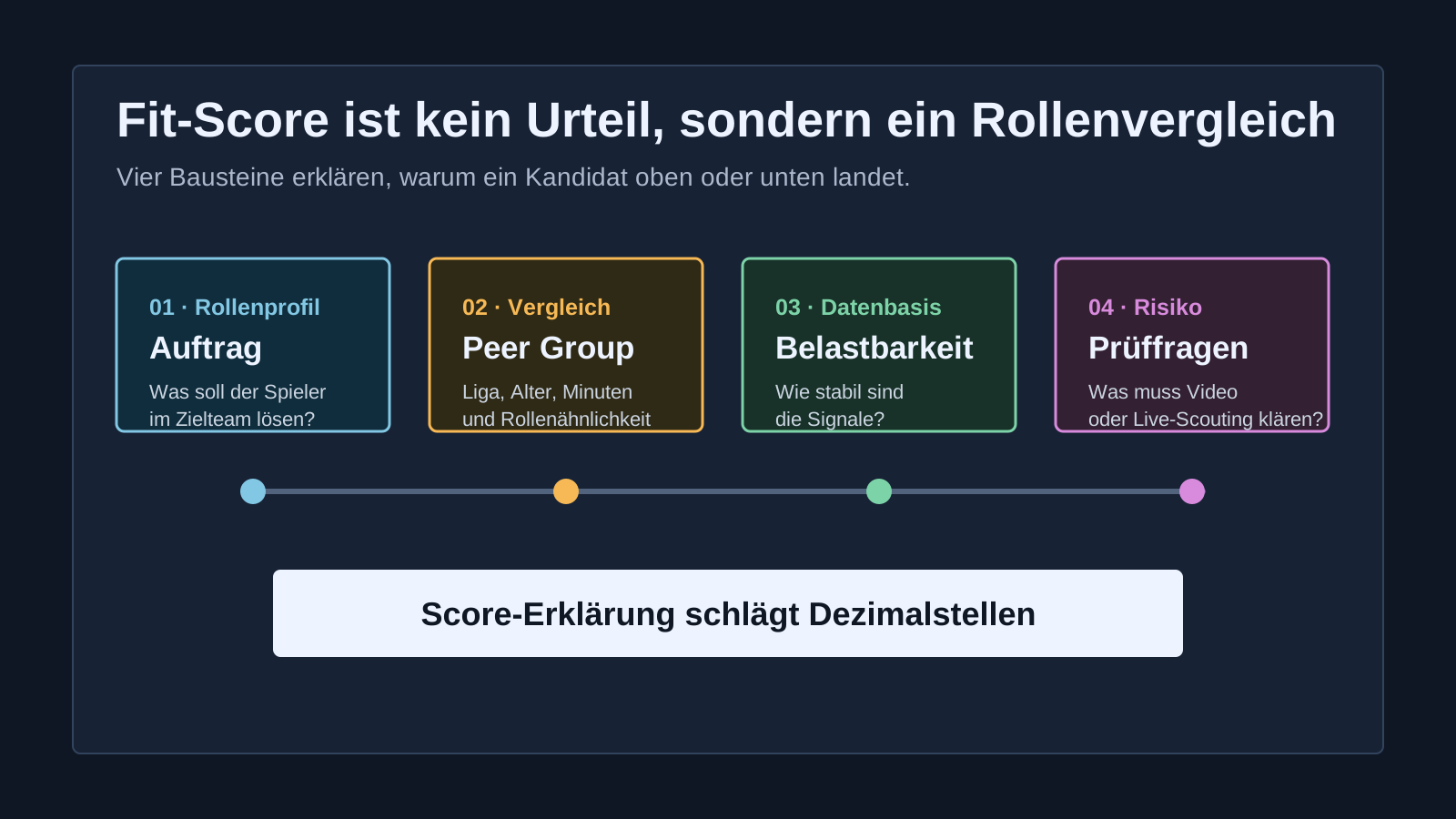
A score needs friction
The uncomfortable truth: a score without explanation is decorated authority.
It looks like a decision. It is only a shortcut.
A high score without explanation is risky.
It becomes useful only when the drivers, gaps and match with the real role are visible.
Good fit scores therefore show:
- the key drivers,
- the peer group,
- the data quality,
- and concrete questions for video or live scouting.
The score is a starting point
The next step is not a blind top-ten list, but a focused review.
That review starts with centre-back signal comparison.
Why comparability is hard in transfer work
Transfer decisions rarely compare like with like.
One player comes from a dominant team, another from a relegation side.
One plays in a strong league, another in a smaller market.
One has 2,500 minutes, another only 700.
Still, sporting directors and scouts must decide which candidate makes the most sense for their own role.
This is where a fit score can help.
It forces the process to define requirements and evaluate candidates through the same logic.
That is valuable as long as one thing remains clear: a fit score is not truth.
It is a structured working hypothesis.
A fit score starts with the role
The biggest mistake would be to read a fit score as general player quality.
A player does not have one objective fit.
He has a fit for a specific role, in a specific game model, against a specific peer group and under specific market assumptions.
Every good score therefore starts with a role profile.
Which tasks should the player solve?
Which metrics support those tasks?
Which values are must-haves and which are bonuses?
Which risks need video or live scouting checks?
Without this work, the score becomes arbitrary.
With it, the score becomes explainable.

Metrics need weighting
Not every metric should count equally.
For a deep number six, pressure resistance may matter more than shot volume.
For a winger in a transition team, runs in behind may matter more than pass completion.
For a centre-back in a high line, open-space defending may matter more than clearance volume.
Weightings translate these priorities.
They show why a candidate with weaker raw numbers can fit better.
A player with less spectacular overall output can be stronger in the target profile if his strengths sit exactly where the club has a need.
That is the central value: the score does not rank general attractiveness.
It ranks role fit.
Peer groups decide fairness
A fit score is only as fair as its peer group.
If a 19-year-old rotation player is compared with experienced starters from top leagues, the view becomes distorted.
If a centre-back from a deep block is compared with a centre-back from a dominant possession side, those context differences must be visible.
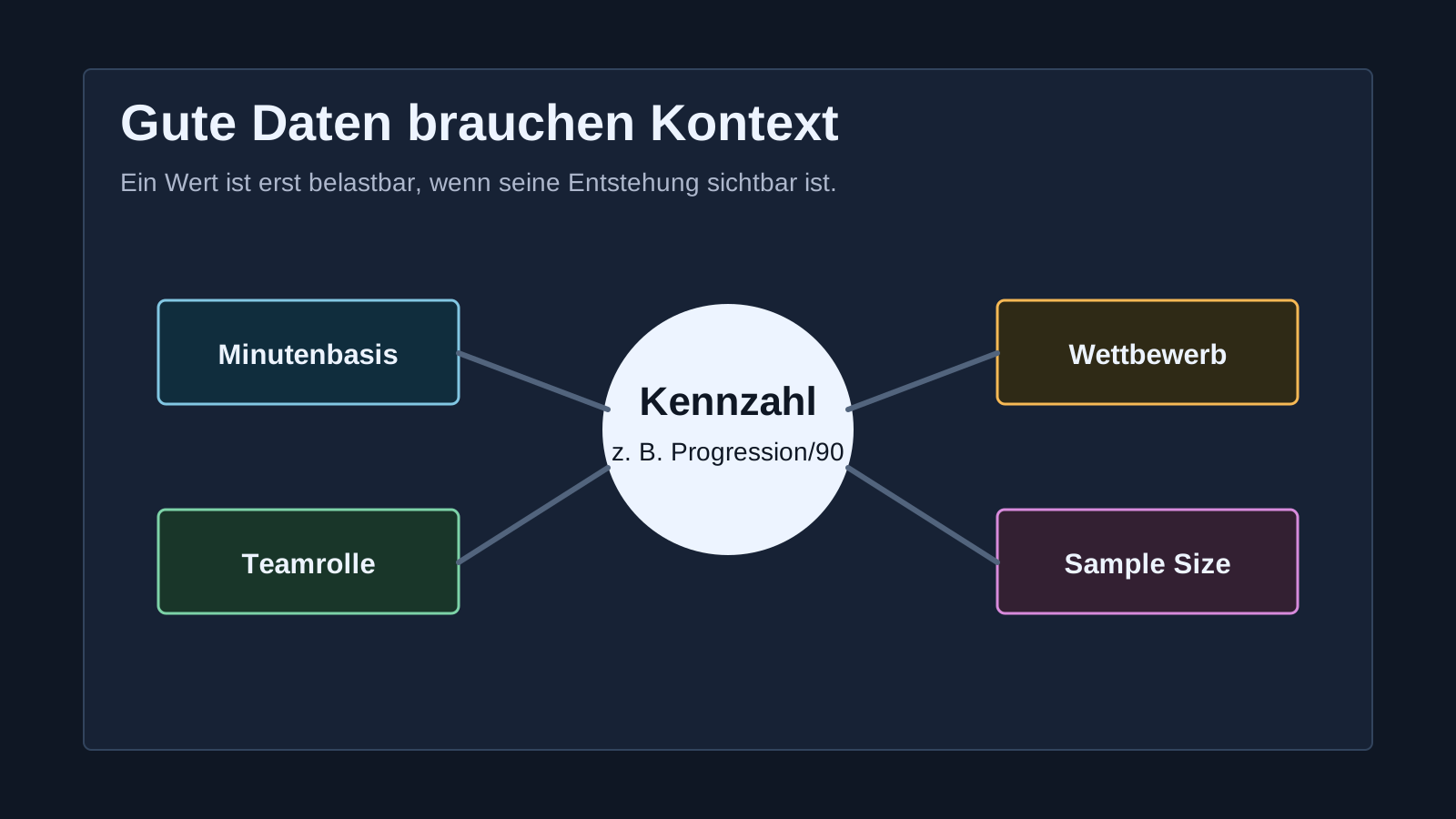
Good peer groups account for position, role, league, age, minutes and sometimes team style.
They do not have to be perfect, but they should be chosen deliberately.
A score without a transparent peer group may look precise, but it is hard to defend in football terms.

Explanation matters more than decimals
A fit score of 82.7 looks precise.
For decisions, it matters more why it is 82.7.
Which metrics carry the score?
Which pull it down?
Which data is missing?
Which uncertainty depends on minutes or competition level?
Every score should therefore come with an explanation.
Not as marketing copy, but as scouting value.
A strong explanation might say: the player fits well because of pressing volume and progressive carrying, but remains risky because of a small minutes sample and weaker defensive duels.
That creates a better discussion.
The score is not the end.
It is the starting point for video work, live scouting and internal evaluation.
How fit scores are misused
Three misunderstandings are especially dangerous.
First: the highest score is automatically the best transfer.
Price, availability, character, injury history and squad balance often sit outside the score.
Second: a low score makes a player uninteresting.
Not always, especially if he is relevant for an alternative role.
Third: a score replaces the scout.
It does not.
It structures the scout’s work.
A good process uses the score as a sorting and explanation tool.
It shows where the evaluation should begin and which questions should be prioritised.
The score as a communication tool
Fit scores are also useful internally.
Coaches, sporting directors, analysts and board members often speak different languages.
The score creates a shared reference point.
It shows whether the discussion is about role fit, data basis, risk or market logic.
This helps especially in close decisions.
If two candidates look similarly attractive, the score explanation can show which player is more strongly supported by evidence, which has more upside or which fits the concrete game idea better.
Conclusion
A fit score is strongest when it remains modest.
It should not claim to solve the transfer market objectively.
It should connect role requirements, data points and context into a traceable first evaluation.
Used correctly, it does not automate transfer decisions.
It makes them cleaner.
It helps compare candidates more fairly, see risks earlier and plan the next scouting work with more focus.
What a score does not see
A fit score can only evaluate what is represented in the data and role logic behind it.
Many decisive factors sit outside that structure.
Medical details, character, adaptation to a new country, language, salary expectations, agent dynamics, family situation or training culture are not automatically part of a score.
That is not an argument against fit scores.
It is an argument for clear limits.
A score should structure sporting fit.
It should not look as if it has solved every transfer dimension.
If a candidate fits brilliantly in sporting terms but is unrealistic economically, that must be visible outside or next to the score.
Keep score and market logic separate
Many clubs mix sporting fit and market attractiveness too early.
Then a cheap player is overrated in football terms, or an expensive player is judged worse because of price.
A two-step view is cleaner: first role fit, then market fit.
Role fit asks: does the player fit our sporting task?
Market fit asks: is the deal realistic and sensible?
Both dimensions matter, but they should remain visible separately.
A player can be perfect sportingly and impossible economically.
Another can be financially attractive but useful only as a squad option.
This separation makes conversations clearer.
The sporting director can decide consciously whether to pursue a strong sporting profile despite high cost or whether a cheaper candidate provides enough role fit.

Using fit scores in meetings
In meetings, a fit score should not simply be projected as a ranking.
A candidate comparison with explanation is better.
For each player, the strongest drivers, biggest risks and open checks should be visible.
The team can then discuss whether the weighting is right.
Maybe a value is weighted too highly because the coach interprets the role differently.
Maybe an important metric is missing.
Maybe a scout sees on video exactly the risk that the score marked.
In each case, the score does its job: it makes the discussion more concrete.
Why low scores are useful
Low scores are valuable too.
They show where a player does not fit the defined profile.
That can support a rejection, but it can also open a new question.
Maybe the player does not fit as a possession full-back but does fit as a defensive wing-back.
Maybe he is wrong for the current team but interesting for another scenario.
A low score should therefore not automatically mean “bad player”.
It means: low fit for this task.
That distinction is central when scouting departments plan several roles and squad paths at the same time.
Score history as a learning tool
If clubs store scores, they can learn later.
Which profiles were rated highly and worked?
Which scores looked good, but the transfer failed in football terms?
Which warning signs were ignored?
This retrospective view is extremely valuable.
A fit score then becomes more than a tool for the current search.
It becomes part of organisational learning.
Weightings improve, role profiles become sharper and candidate discussions become more consistent across transfer windows.
Practical conclusion
A fit score should never decide alone.
But it can ask the better first question: how well does this player fulfil our defined role, based on the data we trust in the current context?
That question is narrower than “how good is the player?”, but that is exactly why it is more useful.
It forces clarity, makes risks visible and helps focus scouting resources on the right candidates.